Joy's Sponsorships
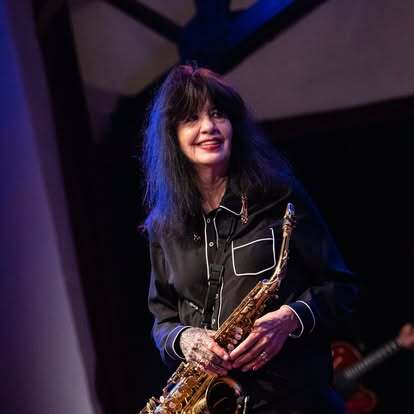
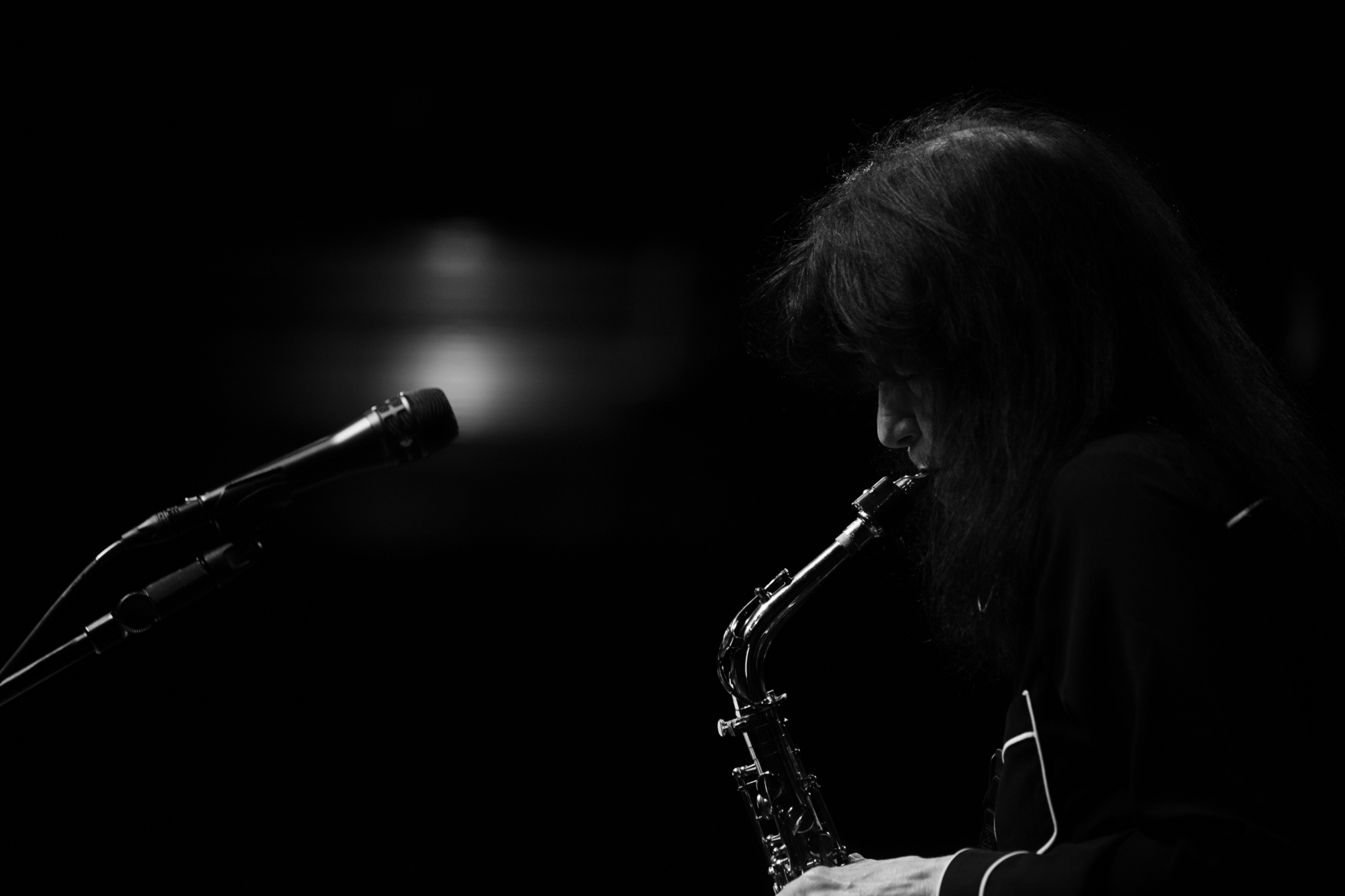

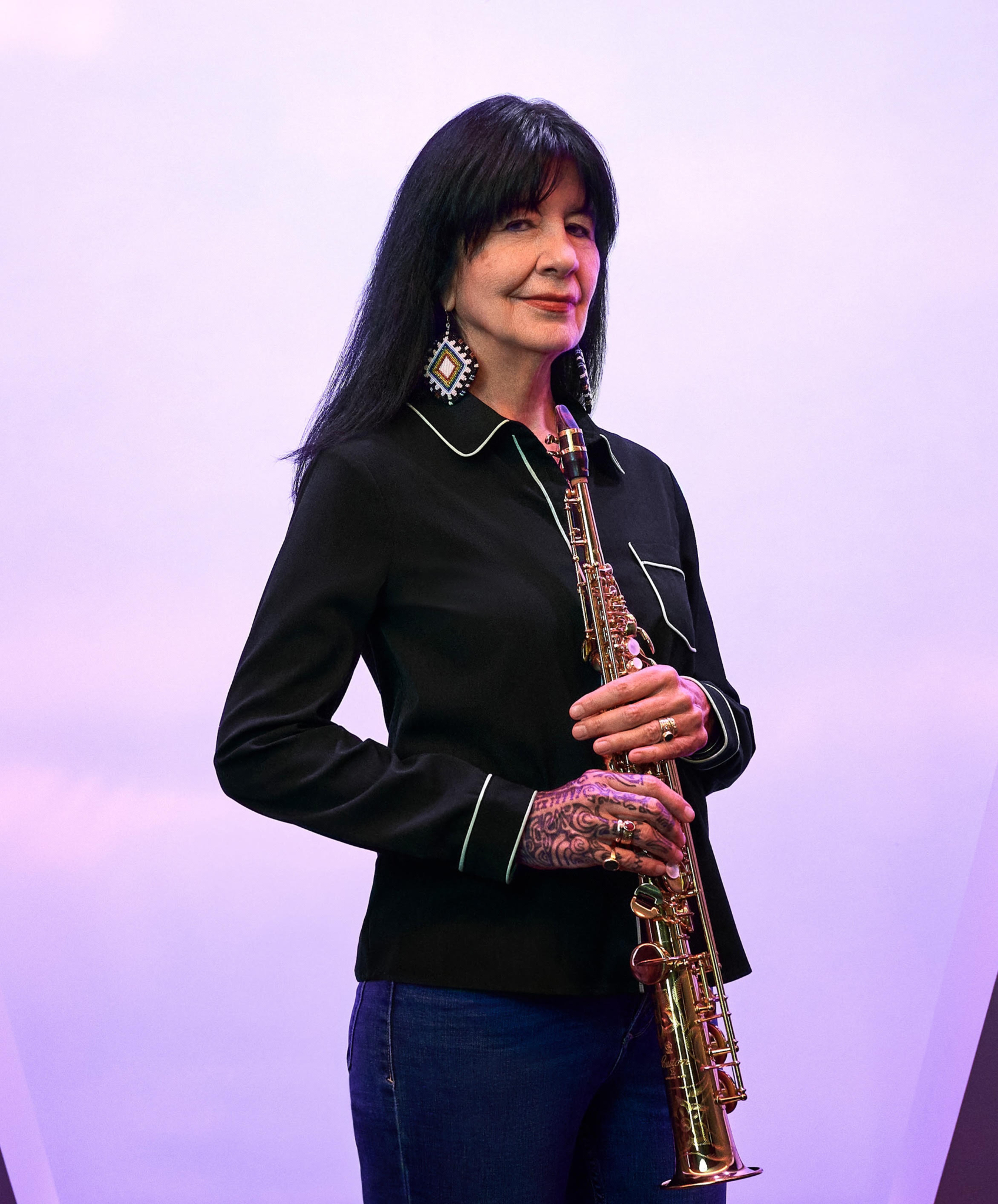
I didn’t start playing saxophone until I was almost forty. I had a long love of the sound of saxophone going back to hearing it played in local country swing bands and then fell in love with John Coltrane and his spiritual soulfulness and the Argentinian horn player Gato Barbieri, whose sound, to my ears, always carried Native elements from his community. When I lived briefly in Denver, I spent my time in jazz clubs and with jazz musicians. I borrowed a tenor saxophone and learned the G blues scale and taught myself from there. During a trip home to the Mvskoke Reservation (then, the Muscogee Creek Nation) I visited my uncle John Jacobs. I played for him. He surprised me with, “We might have your grandmother’s saxophone here somewhere.” He never found it, and it was news to me that my Mvskoke (Muscogee Creek) grandmother played saxophone in Indian Territory, before Oklahoma statehood in 1907. Back then, saxophones were like guitars now in their popularity. Images of women playing saxophone were rare. I knew of the International Sweethearts of Rhythm, but they came after my grandmother died of tuberculosis. She may have been familiar with Mildred Bailey who was a jazz singer from the Cour d’Alene tribal nation who was a heavy influence on singers and jazz during her time, but there were no known Native female horn players. I don’t know what music my grandmother played but the jazz age was in its infancy. She and her sister were both fine artists and I have images of her sister styling in the streets of New York City as she attended meetings for a national art association.
The saxophone found its home in the southeast part of the U.S., after being denounced and reviled in its birthplace in France. The saxophone came into widespread use with jazz and the blues in the South, in the homelands of our Mvskoke people. I often joke that one day the saxophone will be considered a Mvskoke traditional instrument, because our people were part of the origin story of blues and jazz. We are usually left out of a story that acknowledges primarily African influences and inventiveness, with European melody and instrumentation. There is no mention of southeastern Mvskoke tribal peoples, yet Congo Square, considered the mythic birthplace, was a Mvskoke village. That’s where the Africans, trapped at that time in slavery, hung out when they had their day off. Music was shared in what I imagine was a kind of cultural call-and-response. Our Mvskoke traditional music embodies the elements of jazz, like blue notes, swing, improvisation…
We don’t just have familial ancestors, but ancestors of saxophone, of any field of knowledge or endeavor. I acknowledge Adolfe Sax and his musical breakthrough in his invention of saxophones, and my own ancestors of saxophone that include John Coltrane and Gato Garbieri, and I won’t forget Jim Pepper, a Mvskoke and Kaw jazz sax player and mentor, along with my grandmother Naomi Harjo, and many many others.
They were with me when esperanza spalding, Matthew Stevens, Justin Tyson, and I went into Church Studio to make what became INSOMNIA AND SEVEN STEPS TO GRACE. Each musician came with their own circle of music ancestors. You can hear them in the album!
-- Joy Harjo